DATE: 2025
PRODUCT: Tachyon, Wells Fargo’s internal AI platform and playground that lets teams prototype and test GenAI use cases on top of a model-agnostic architecture. It supports frontier and on-prem models and underpins large-scale deployments such as the Fargo assistant and other enterprise agents.
ROLE: As Director of the Innovation Enablement team, I partnered with engineering leadership to shape the next stage of Tachyon. I played both coach and player, helping the core team clarify the product vision, run cross-functional workshops, and redesign the experience so that engineers, data scientists, and non-technical partners could all use the platform with confidence.
IMPACT: The work reframed Tachyon from a technical playground into a shared AI product for the company. It aligned leaders on a clear challenge, defined four guiding experience pillars, and translated them into an interaction model that can scale from early experiments to production-scale use. Tachyon is now described externally as a key part of Wells Fargo’s AI strategy, providing the orchestration layer for multiple models and clouds and avoiding vendor lock while the bank grows AI-powered productivity and customer experiences.
Framing The Challenge
After conversations with engineering leadership, our teams decided to collaborate to help prepare Tachyon for a major step up in visibility and usage. What was created for a small beta of experts had to be prepared for broad access to thousands of employees.
We want Tachyon to become the place where employees can safely explore AI, build early proofs of concept, and then graduate the most valuable ideas into production.
The first step was to clarify and frame the scope of the work. I want to capture the tension between simplicity and depth, and the need to bake governance into the product itself rather than treat it as a separate process:
Create a simple, intuitive tool that is accessible to everyone, with advanced features for experienced users, while integrating robust risk controls that allow scalable and supervised AI use in compliance with policy.
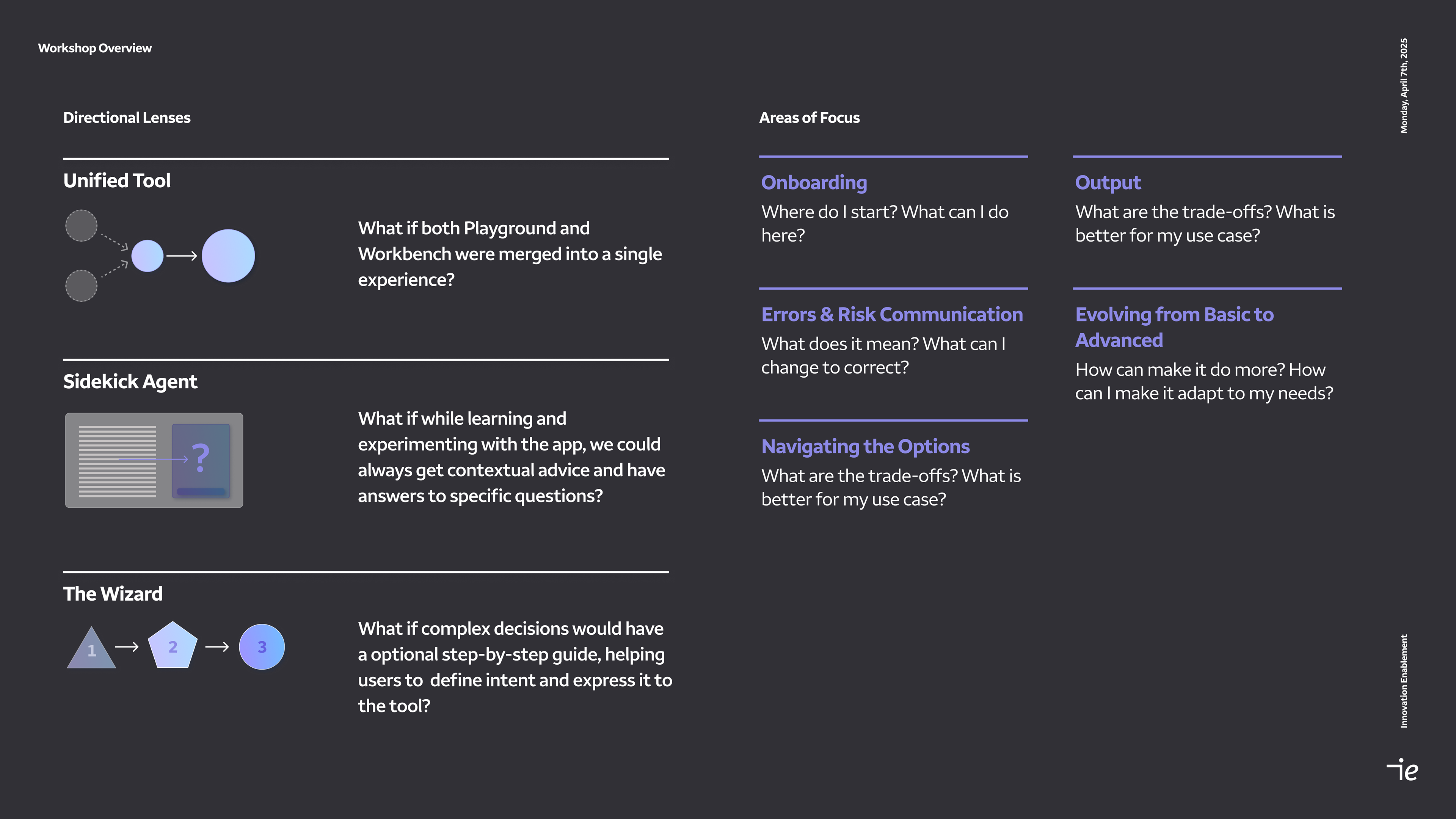
Directional lenses
Before jumping into screens, we identified key tensions and created three distinct directional lenses to help us explore different futures for Tachyon.
Unified Tool – What if the existing Playground and Workbench became a single experience, so people didn't have to choose the “right” starting point?
Sidekick Agent – What if the product always gave contextual advice as people experimented, not just when they opened documentation?
The Wizard – What if complex decisions had an optional guided path that helps users express intent and surface the right options without hiding advanced controls?
These lenses guided our workshops with engineers, PMs, and designers. They also gave leaders a language to talk about tradeoffs in public forums like the Tech Showcase.
Four pillars for an enterprise AI platform
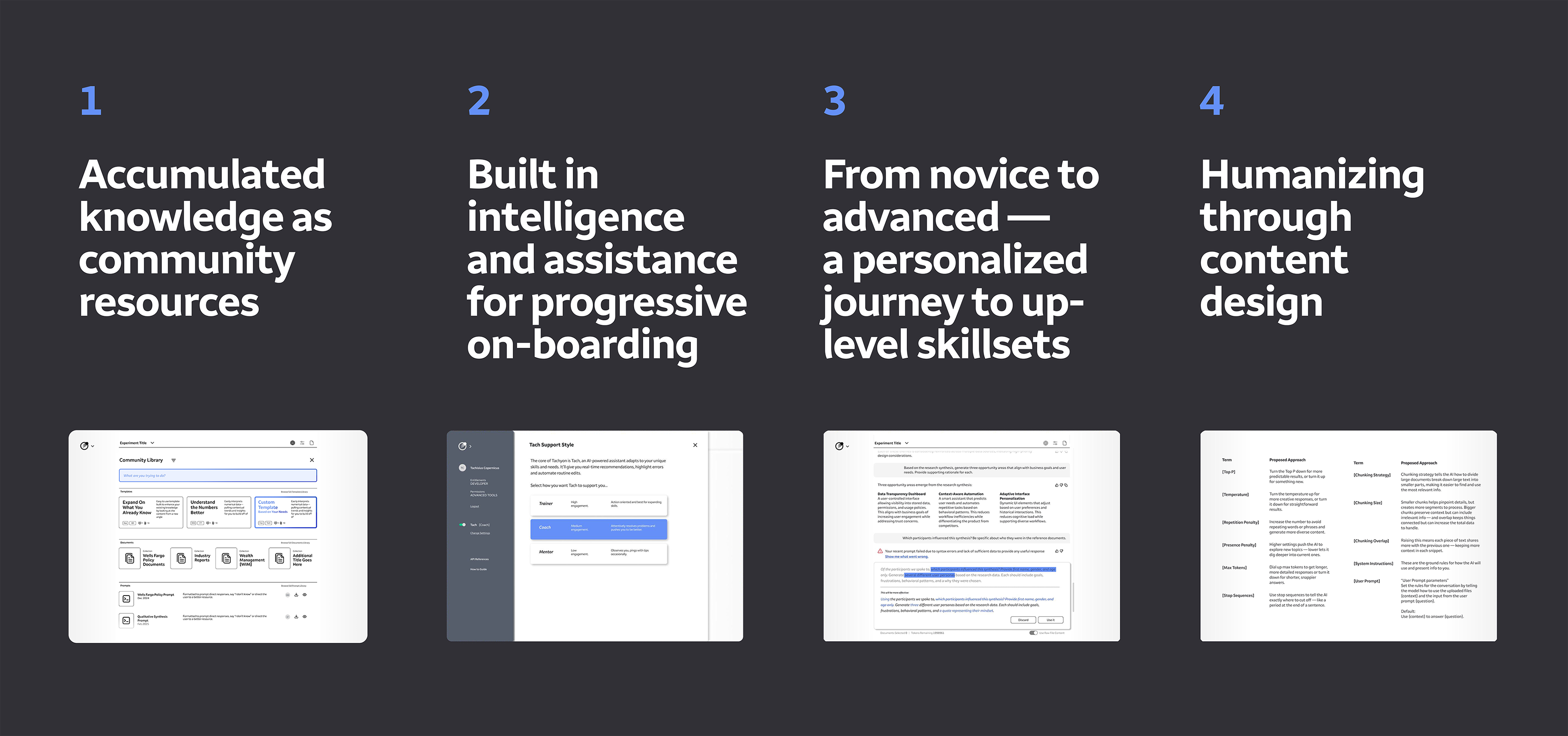
From the early work we converged on four pillars that defined the Tachyon product vision.
• Accumulated knowledge from the community
• Built in intelligence and assistance
• From novice to advanced, a personalized journey
• Humanizing through content design
The rest of the work translated these ideas into concrete flows and UI. The goal was to make Tachyon feel like a place where you build on what others have learned, get help when you need it, and grow your skills over time.
Landing experience
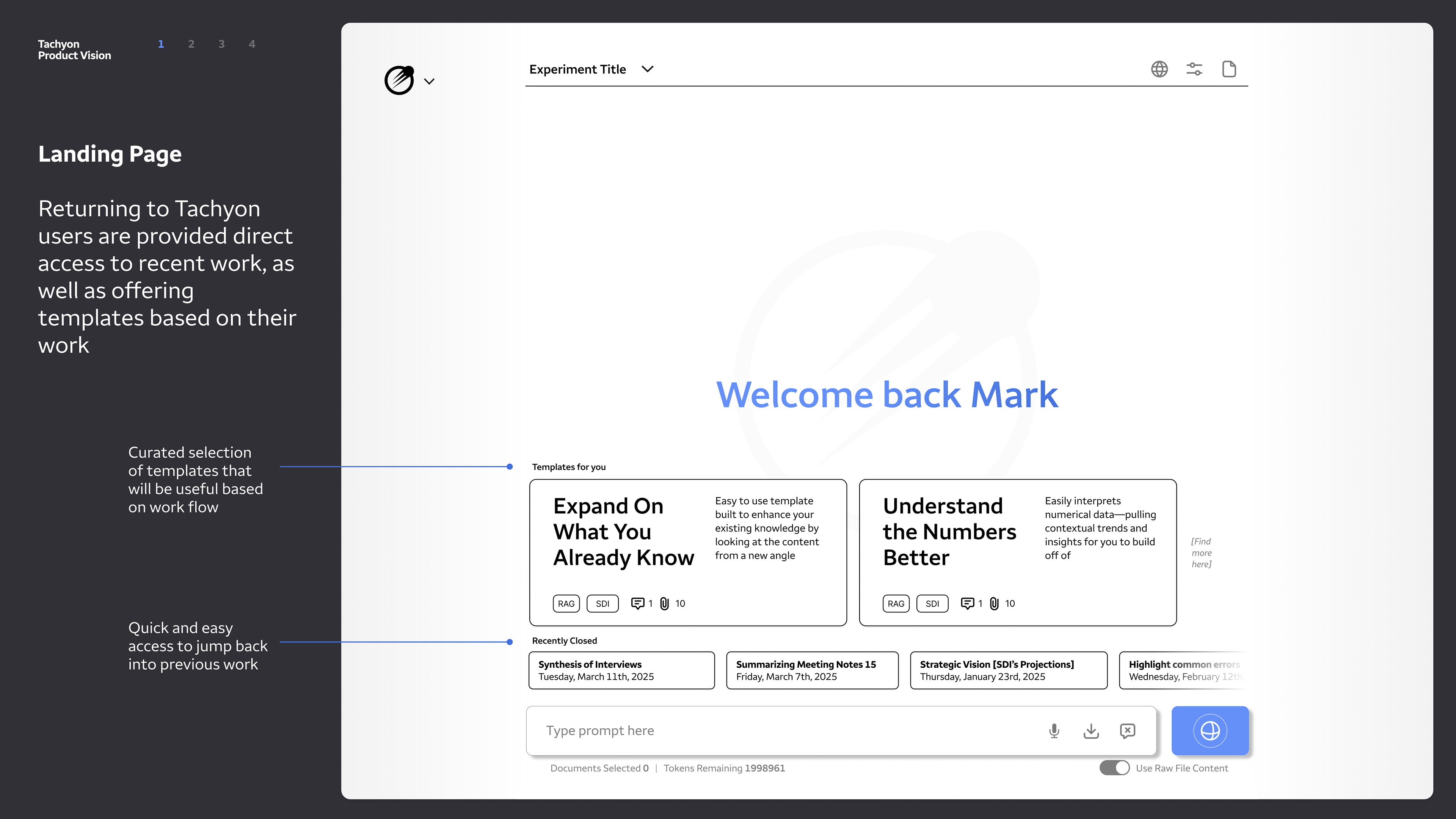
The landing page treats returning users as people with a history, not as anonymous query boxes.
• A welcome surface that pulls recent experiments forward so people can quickly continue where they left off.
• A curated set of templates that match the person’s work patterns so they do not have to guess what AI is good for.
• A single prompt field that keeps the interaction grounded in natural language, while quietly tracking documents, tokens, and other technical details in the background.
This screen shows how we balanced clarity for non experts with enough information for advanced users who care about what is going on under the hood.
Community library
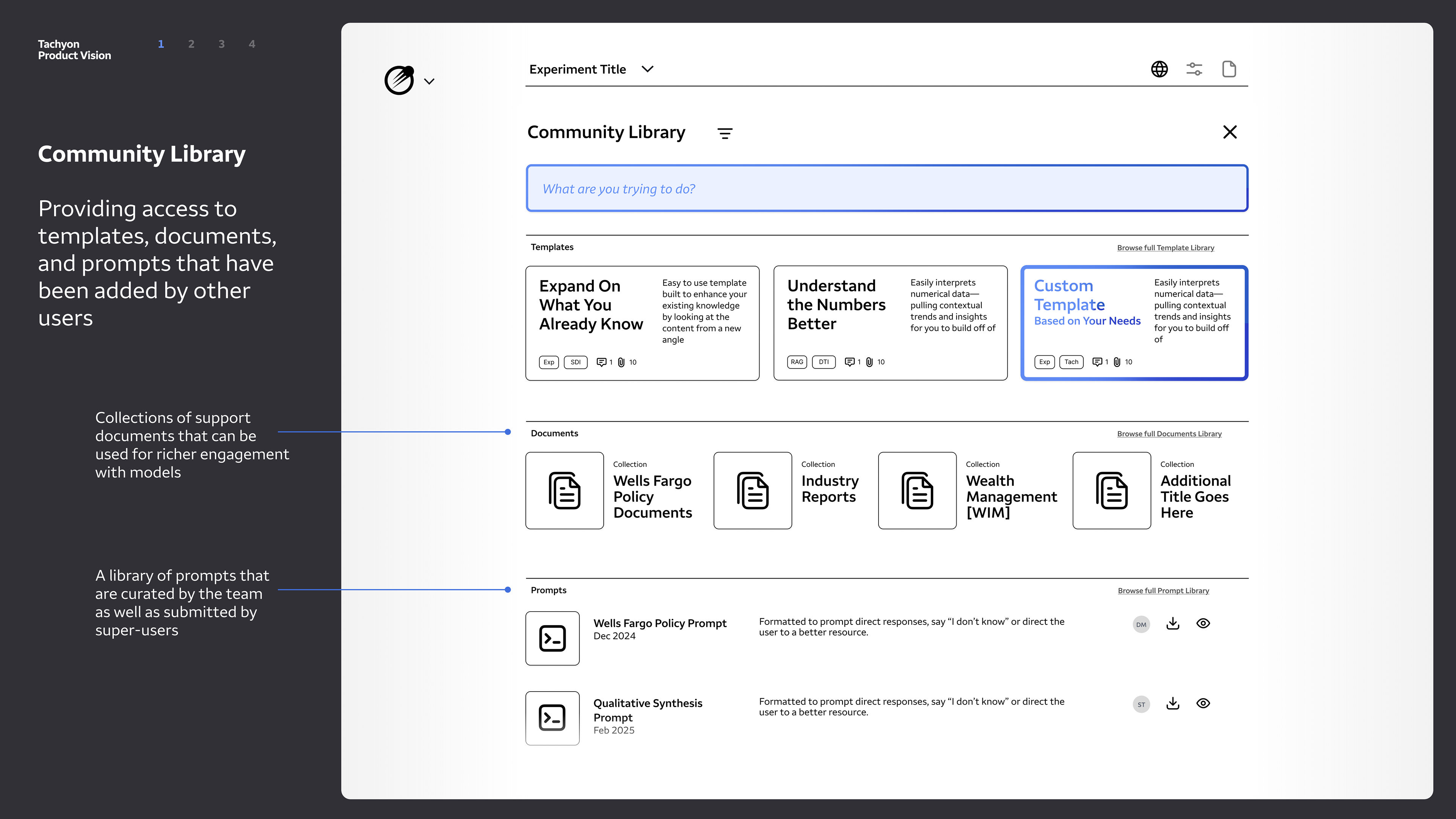
The community library turns Tachyon into more than a solo workspace.
• Collections of documents that have been vetted for use with models, such as policy manuals, industry reports, or research data.
• A library of prompts and templates shared by teams and super users so people can start from something that already works instead of writing from scratch.
• Filters and labels that reflect how the organization thinks about lines of business, not only how engineers think about systems.
By surfacing and promoting accumulated and validated knowledge, this shows how design can reduce risk by nudging people toward approved content and patterns rather than leaving them to improvise.
Built in assistance and modes of engagement
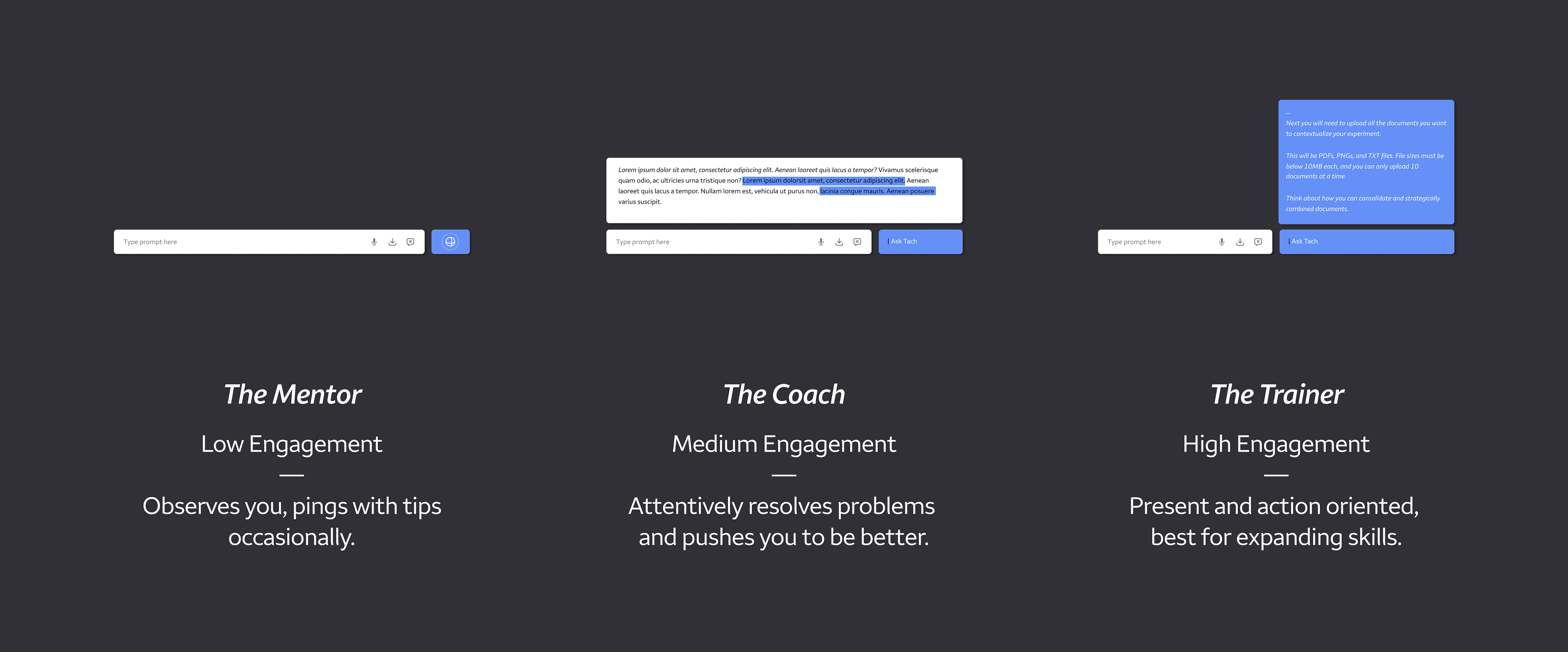
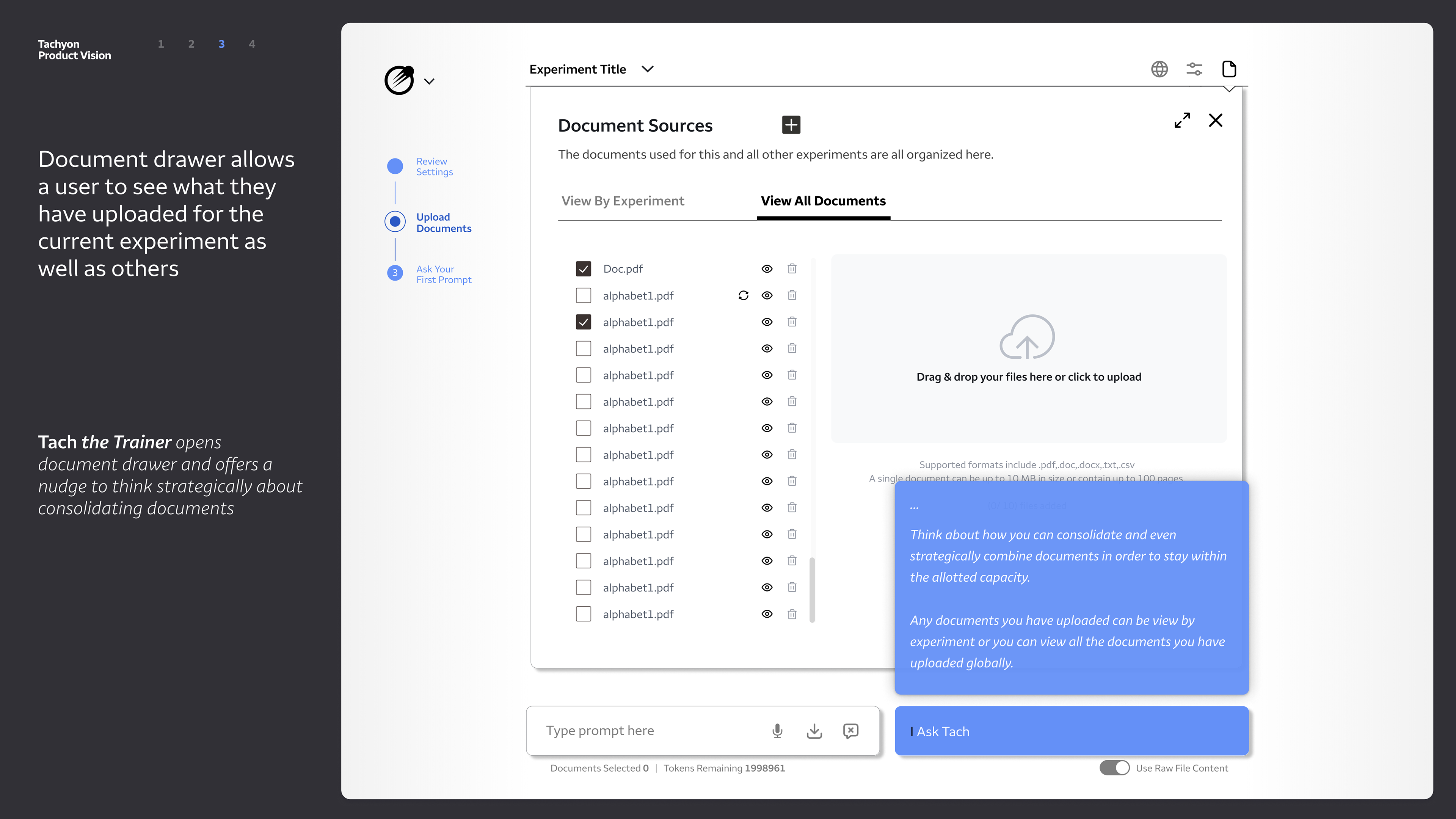
We treated Tachyon’s assistant as a presence that can change over time, not a single fixed behavior. We defined three engagement modes that map to different stages of confidence:
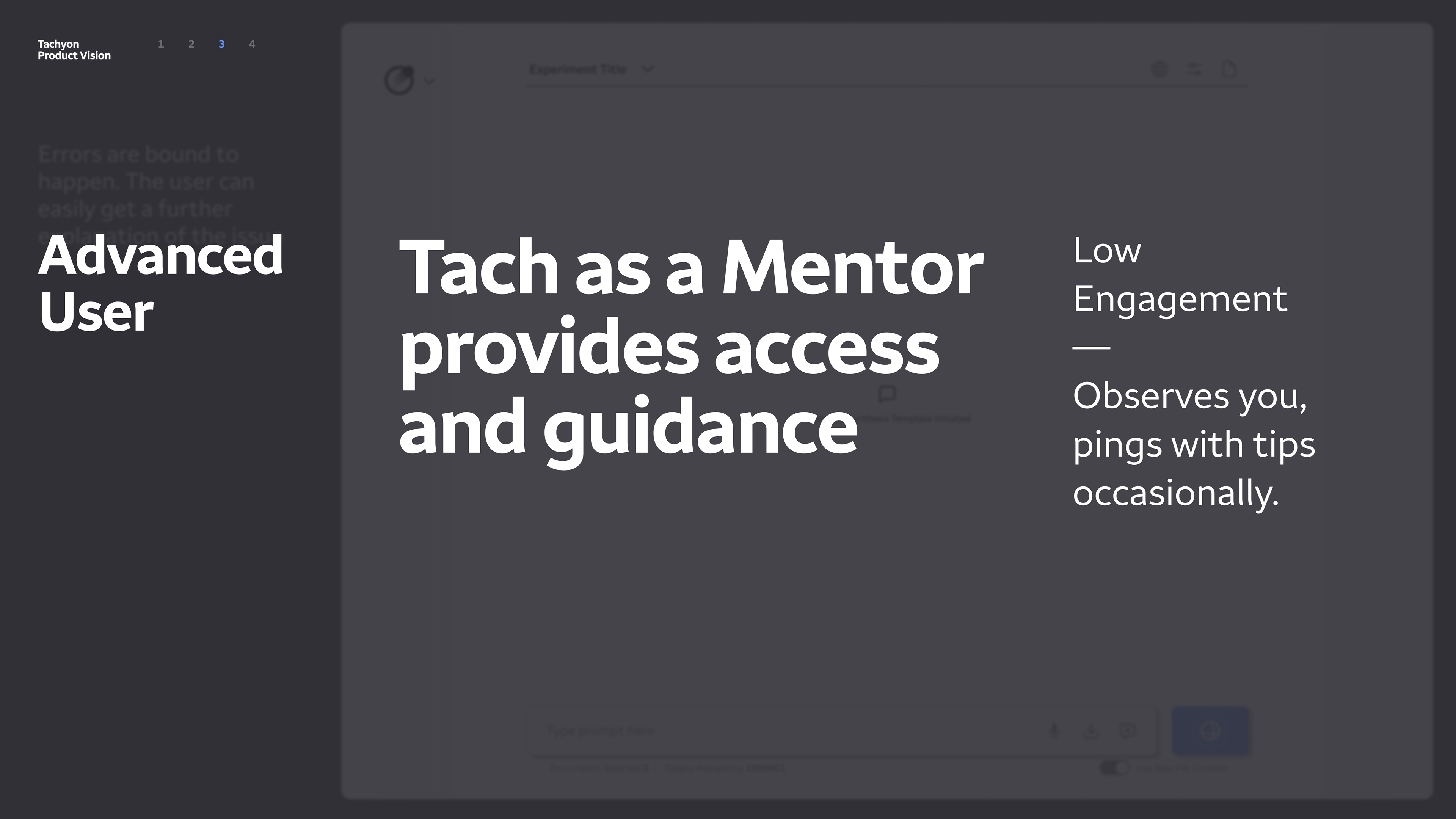
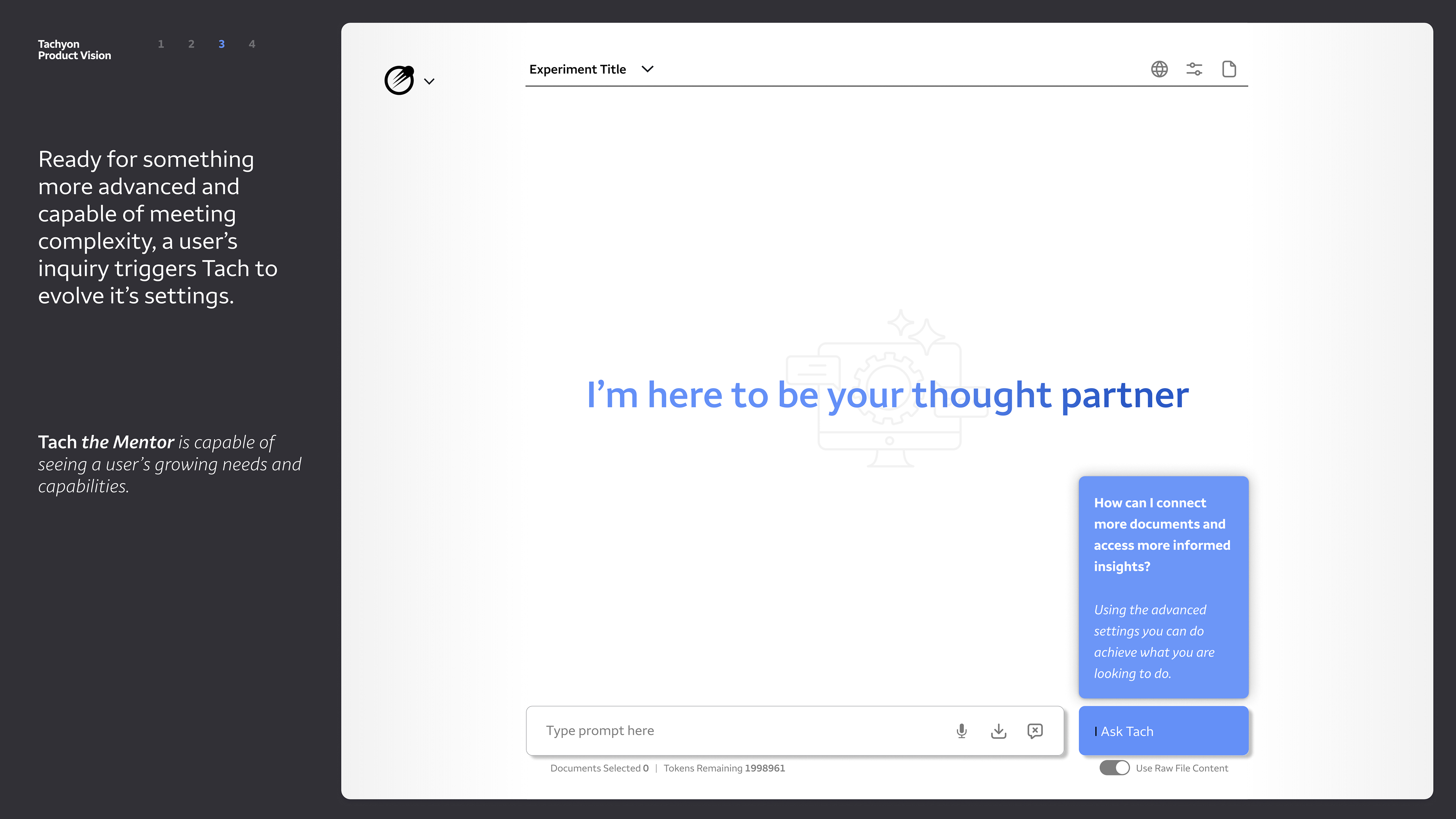
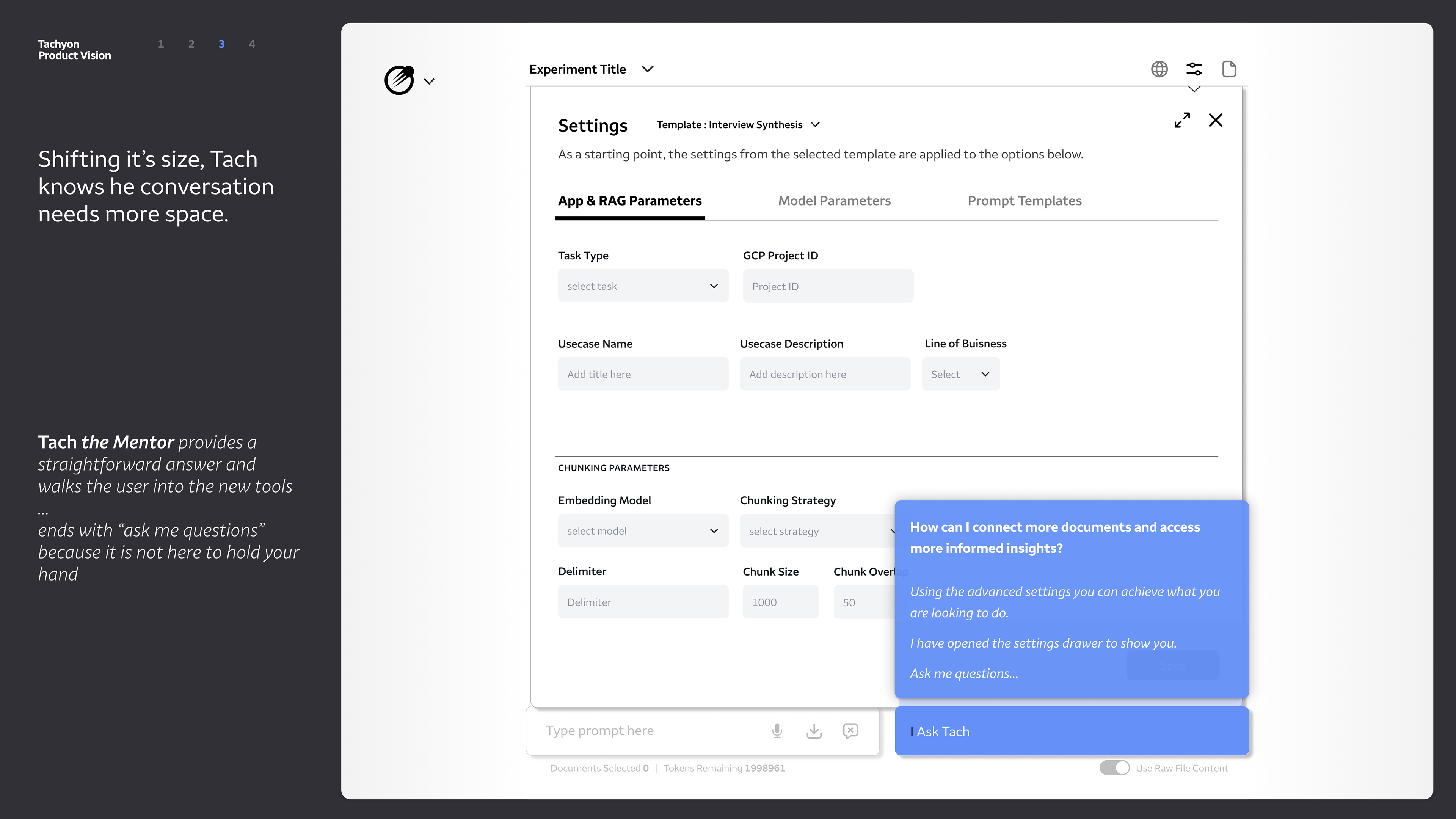
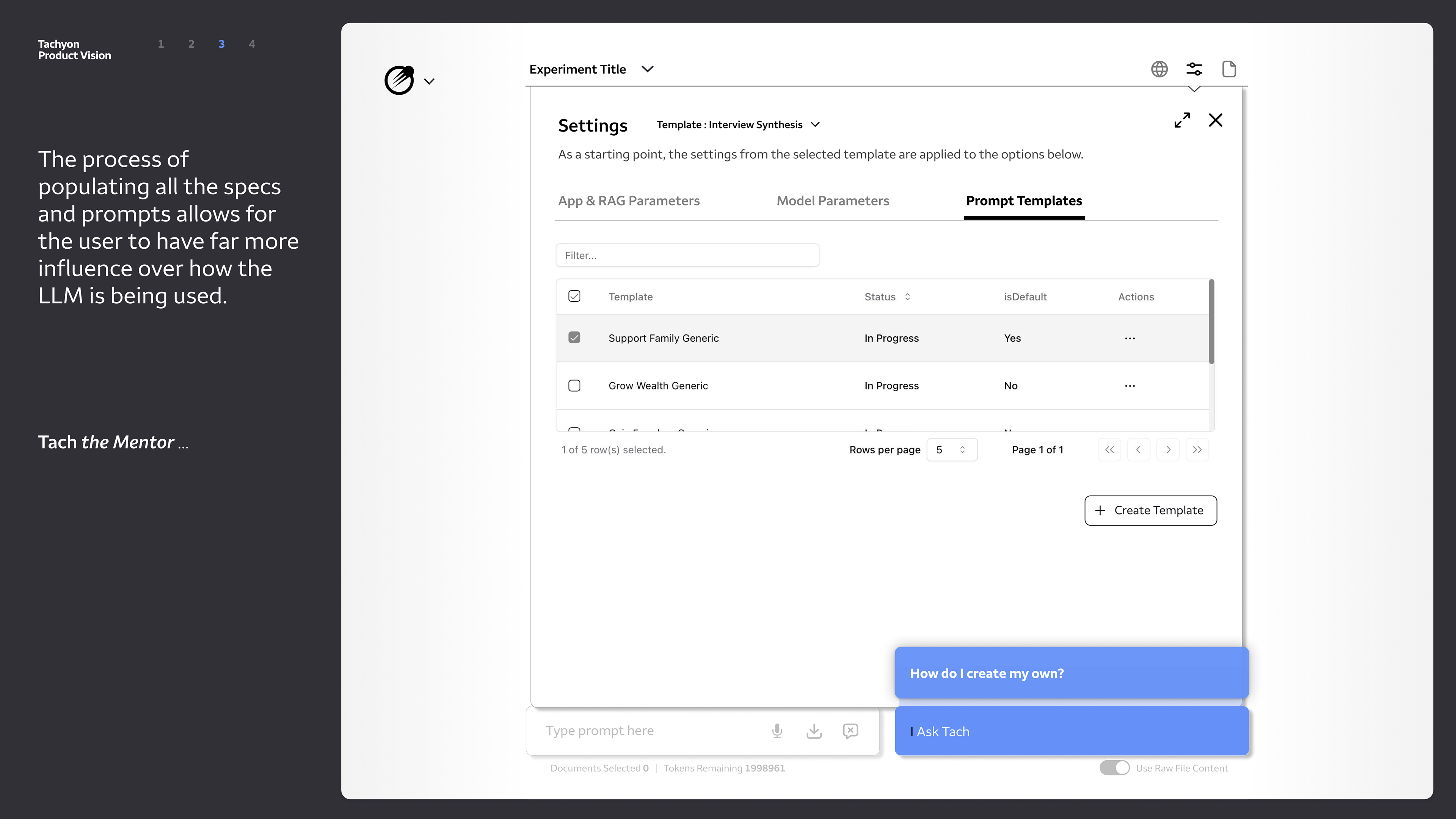
The Mentor – Low engagement. Mostly observes and offers gentle tips, suitable when someone is just getting used to the tool.
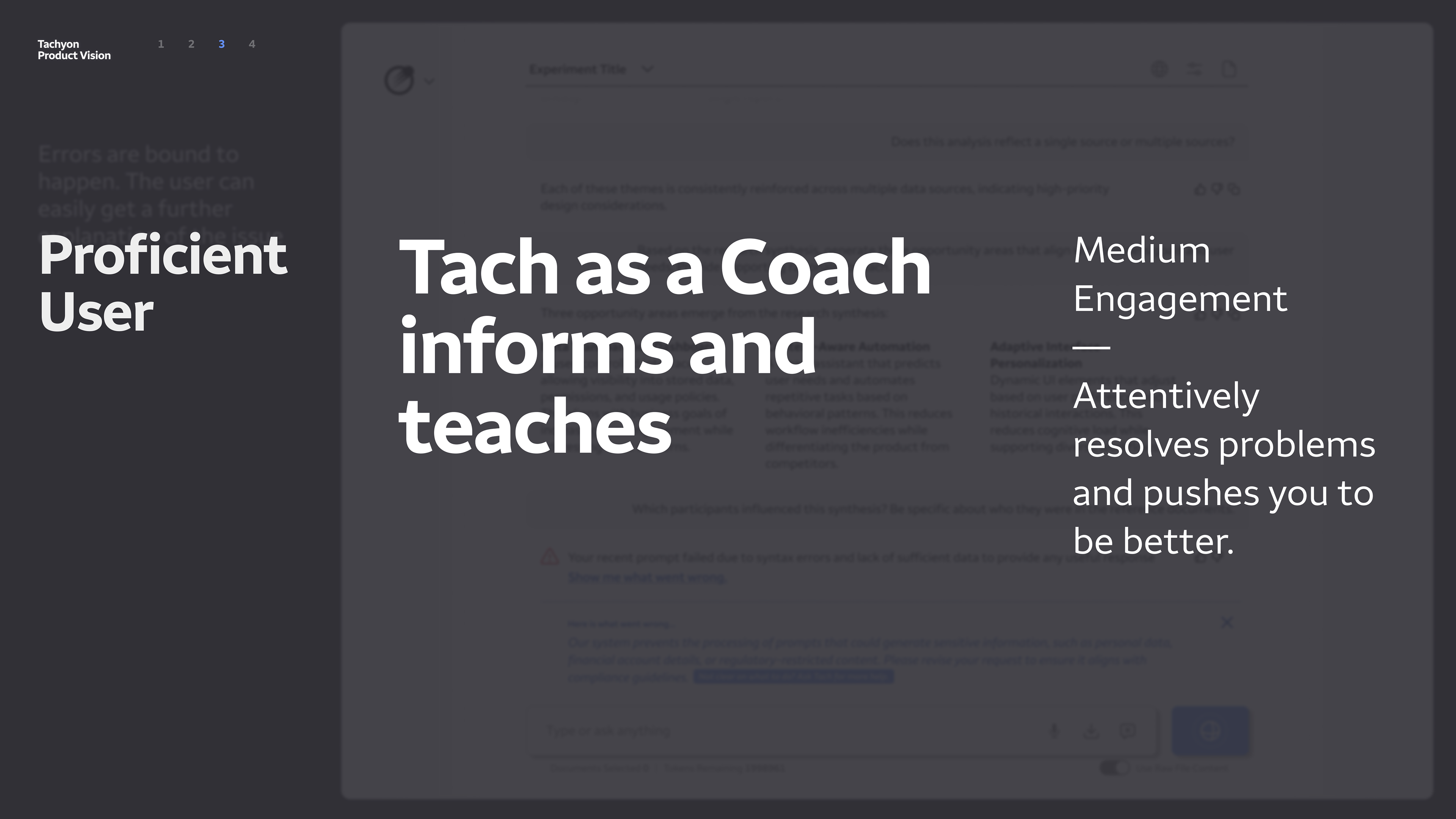
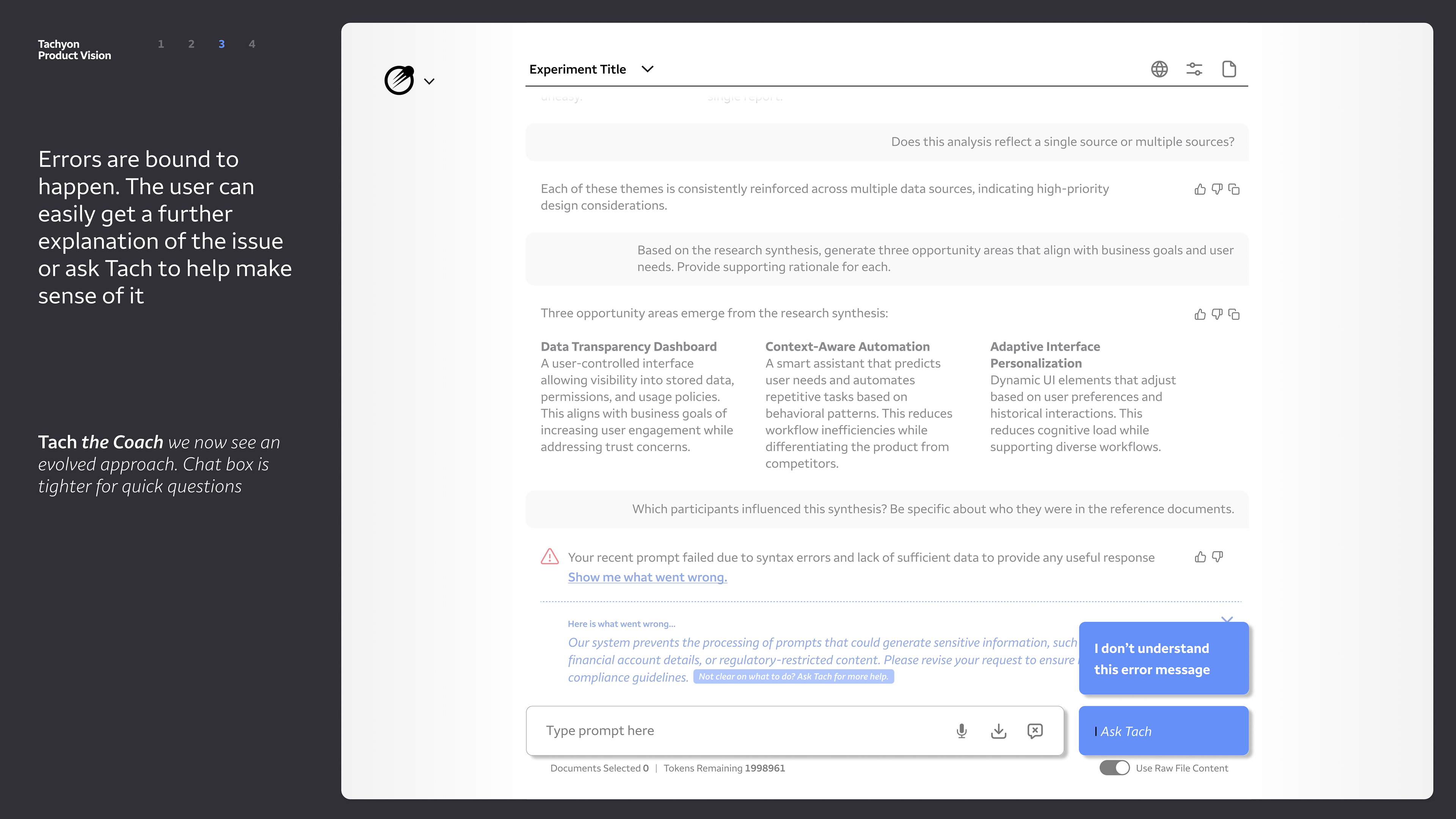
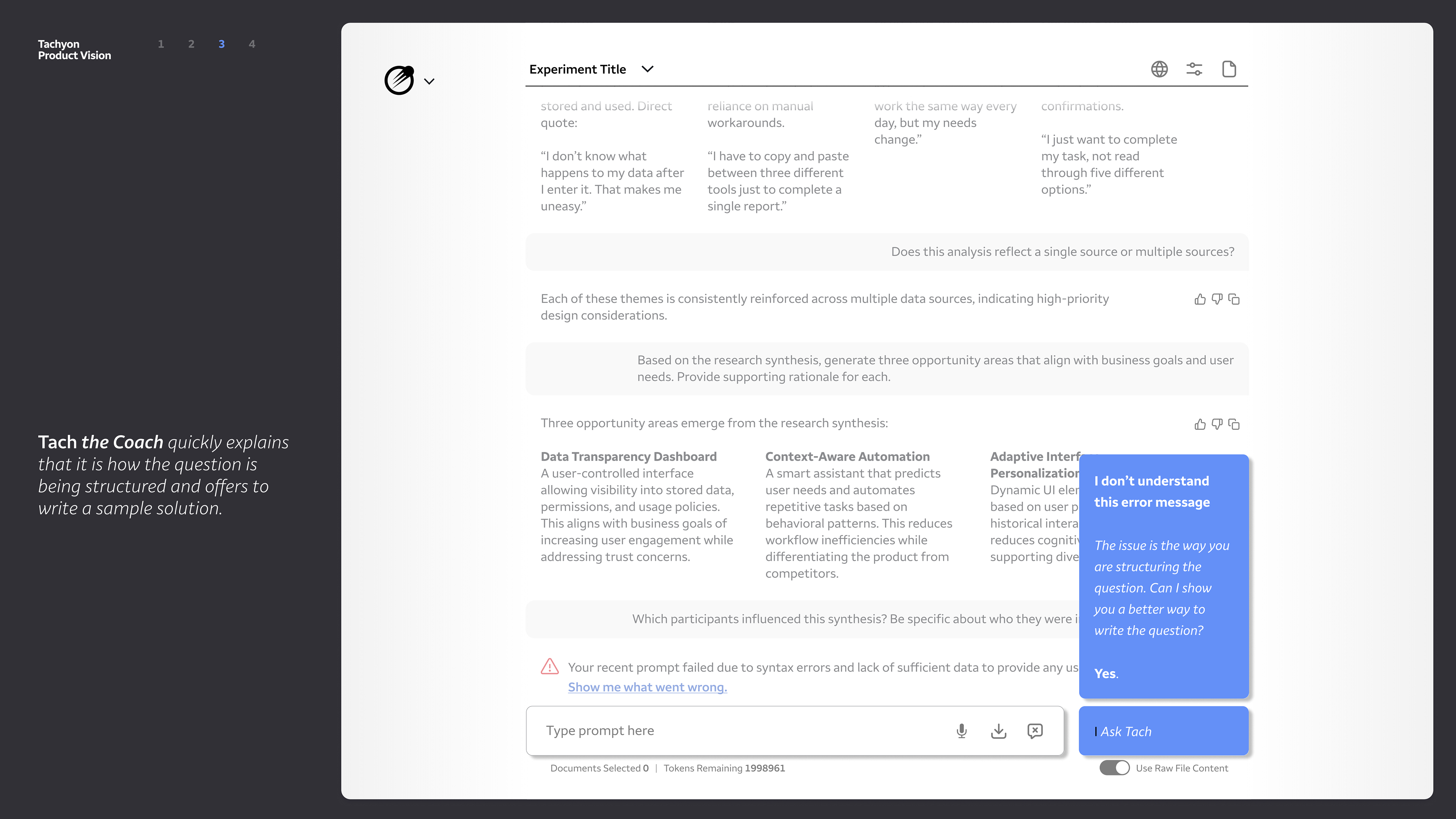
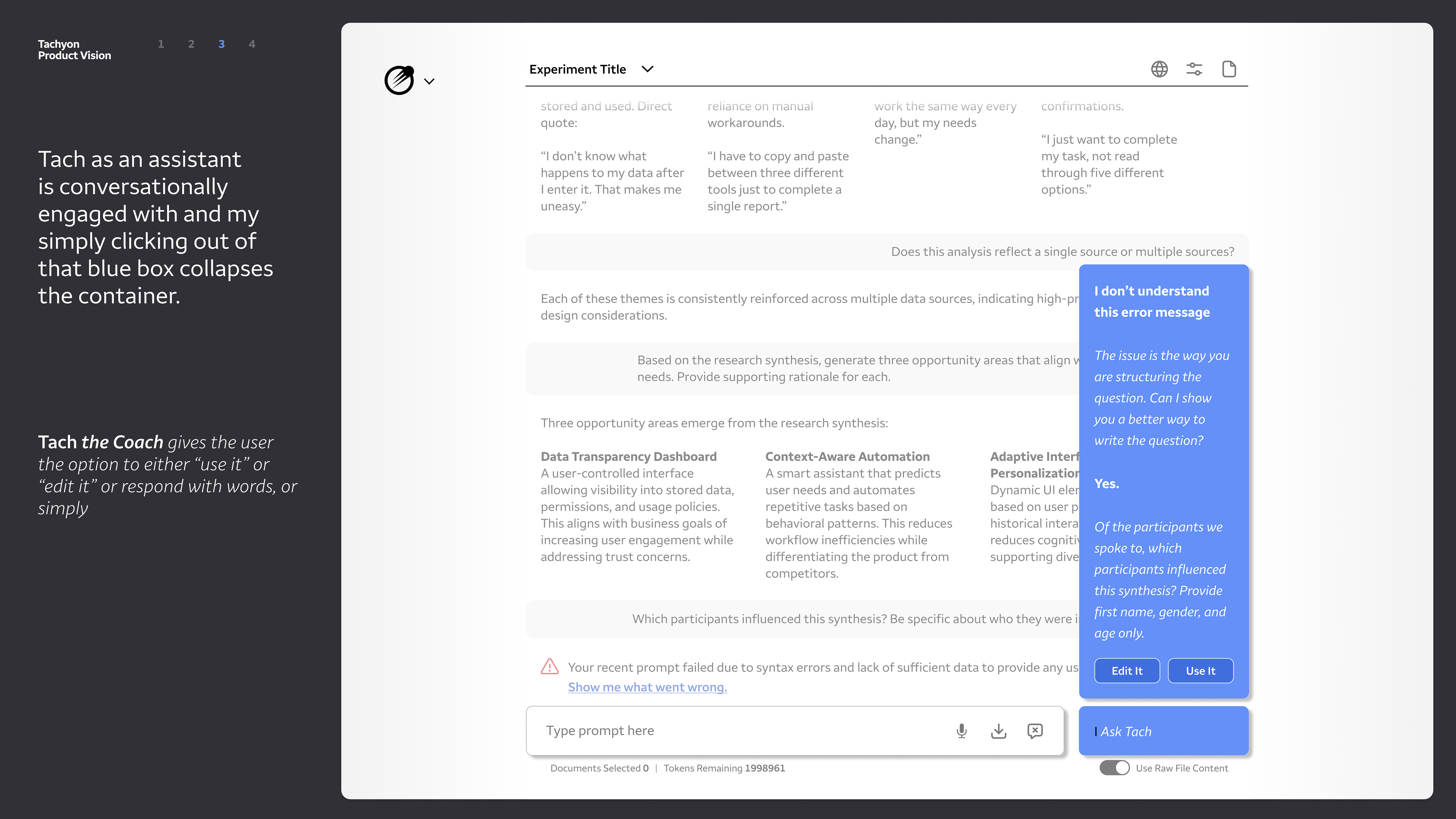
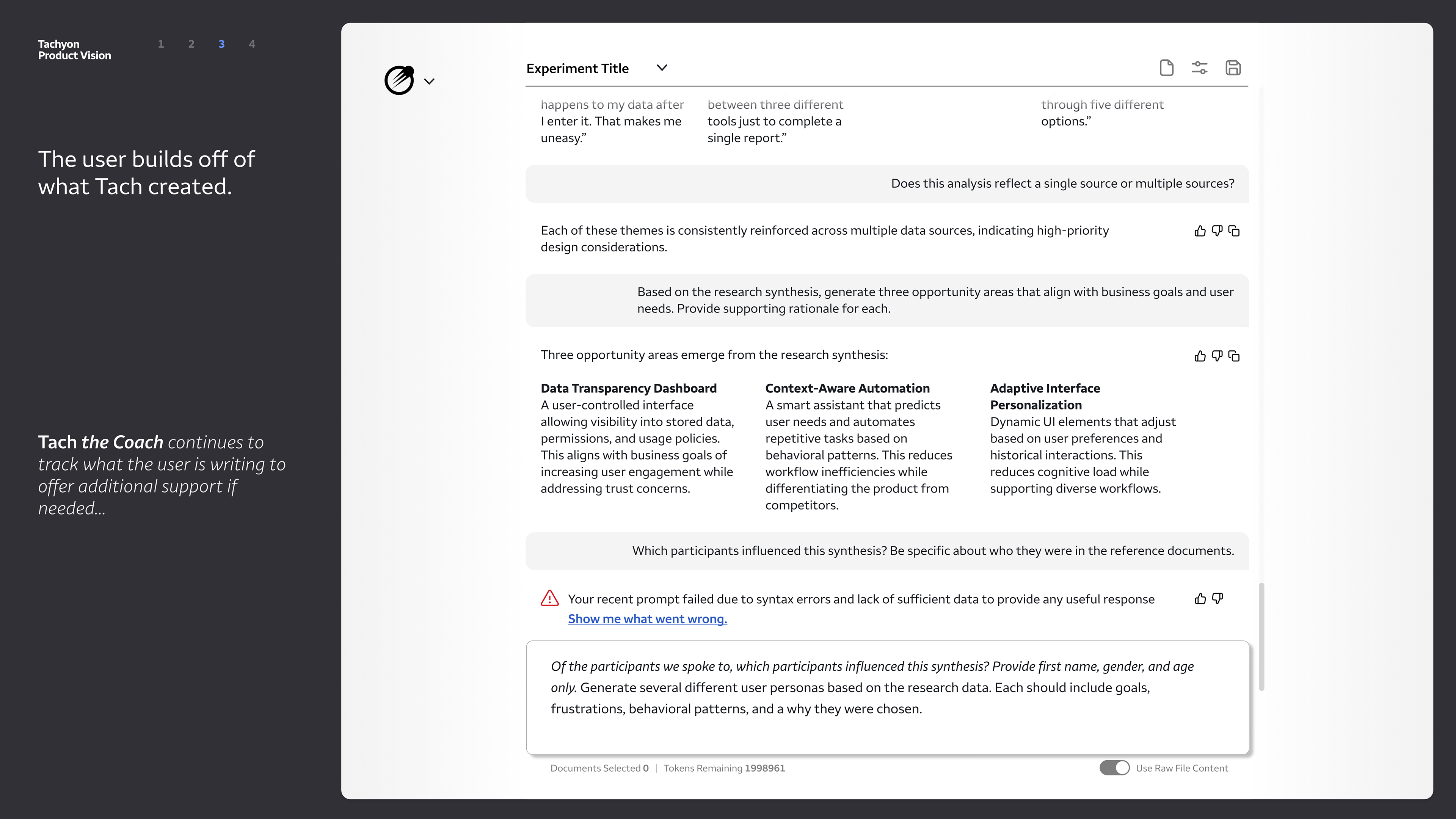
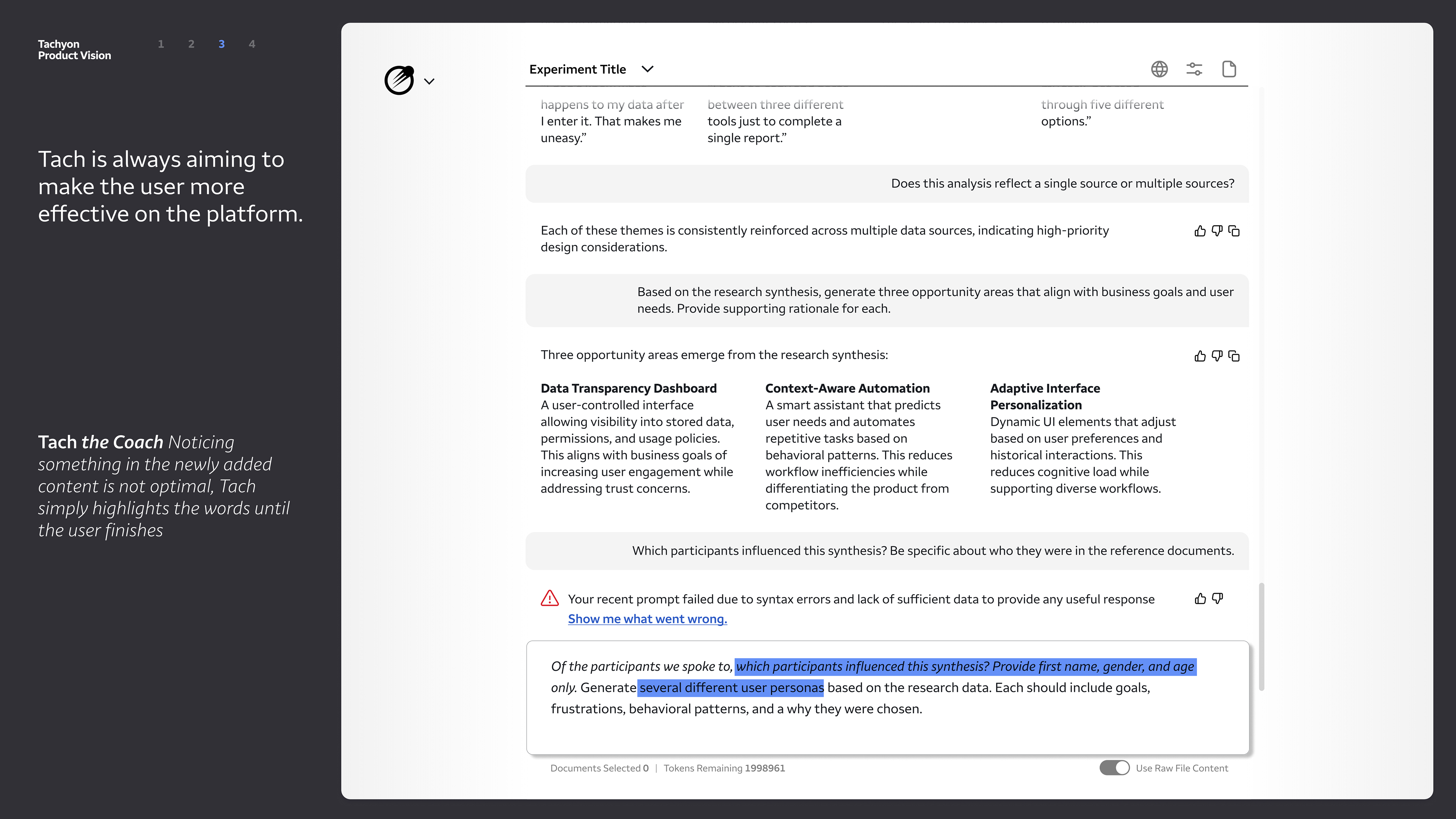
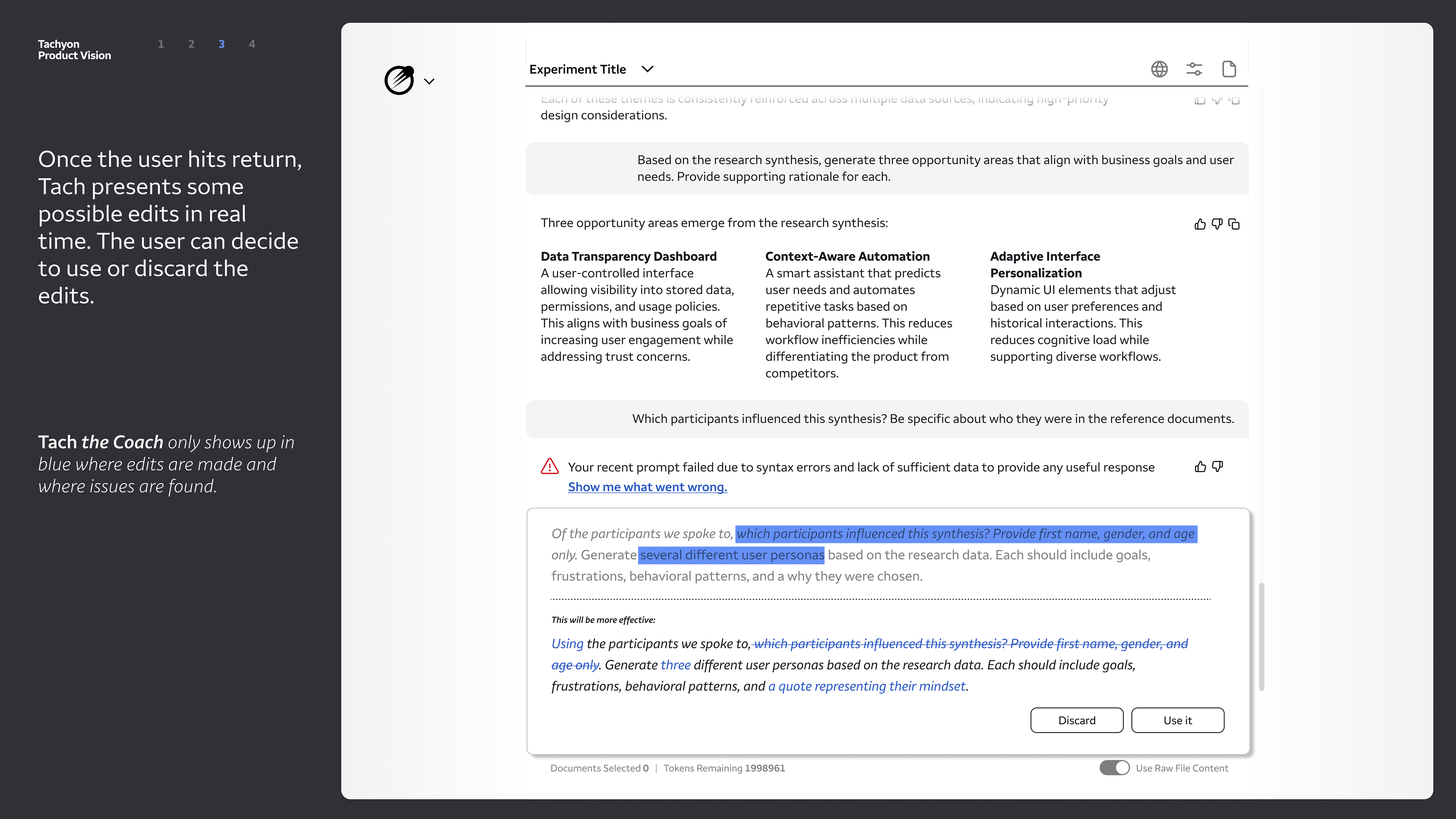
The Coach – Medium engagement. More active in resolving problems and nudging people toward better techniques.
The Trainer – High engagement. Present and action oriented, best when someone is deliberately expanding their skills.
These modes helped engineering think about when the system should speak up, when it should stay out of the way, and how to adapt over time without surprising people.
From novice to advanced — a personalized journey.
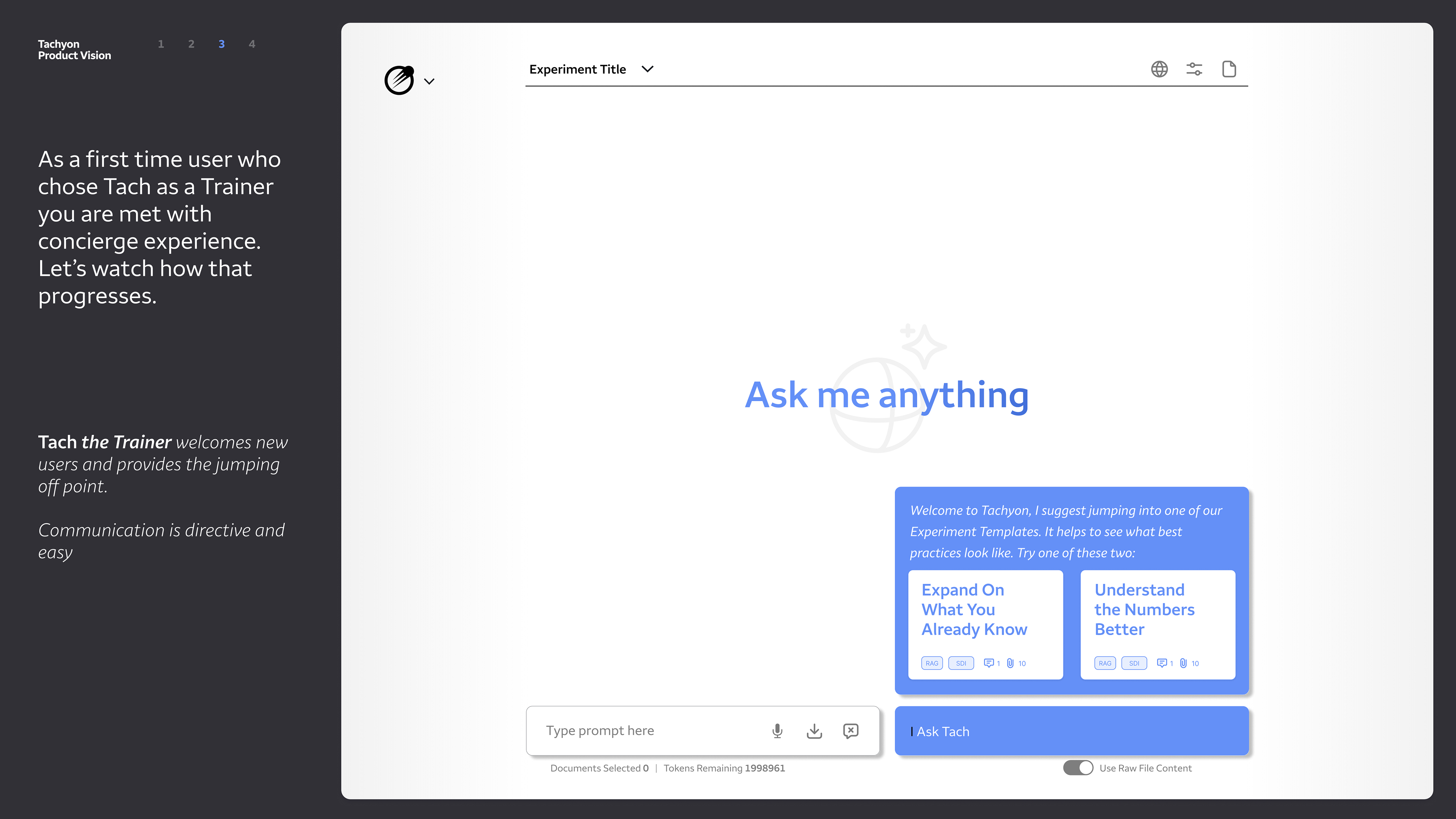
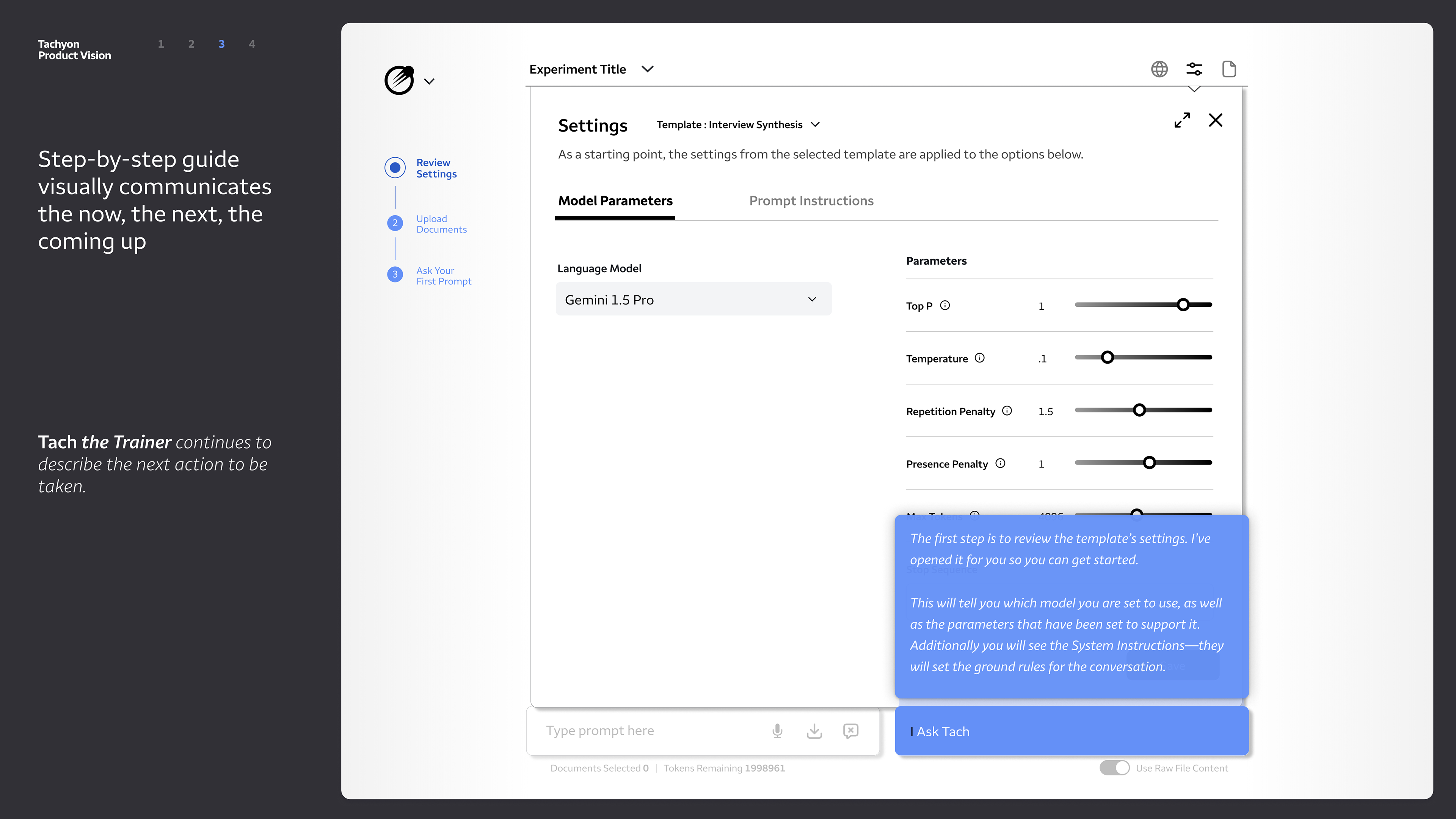
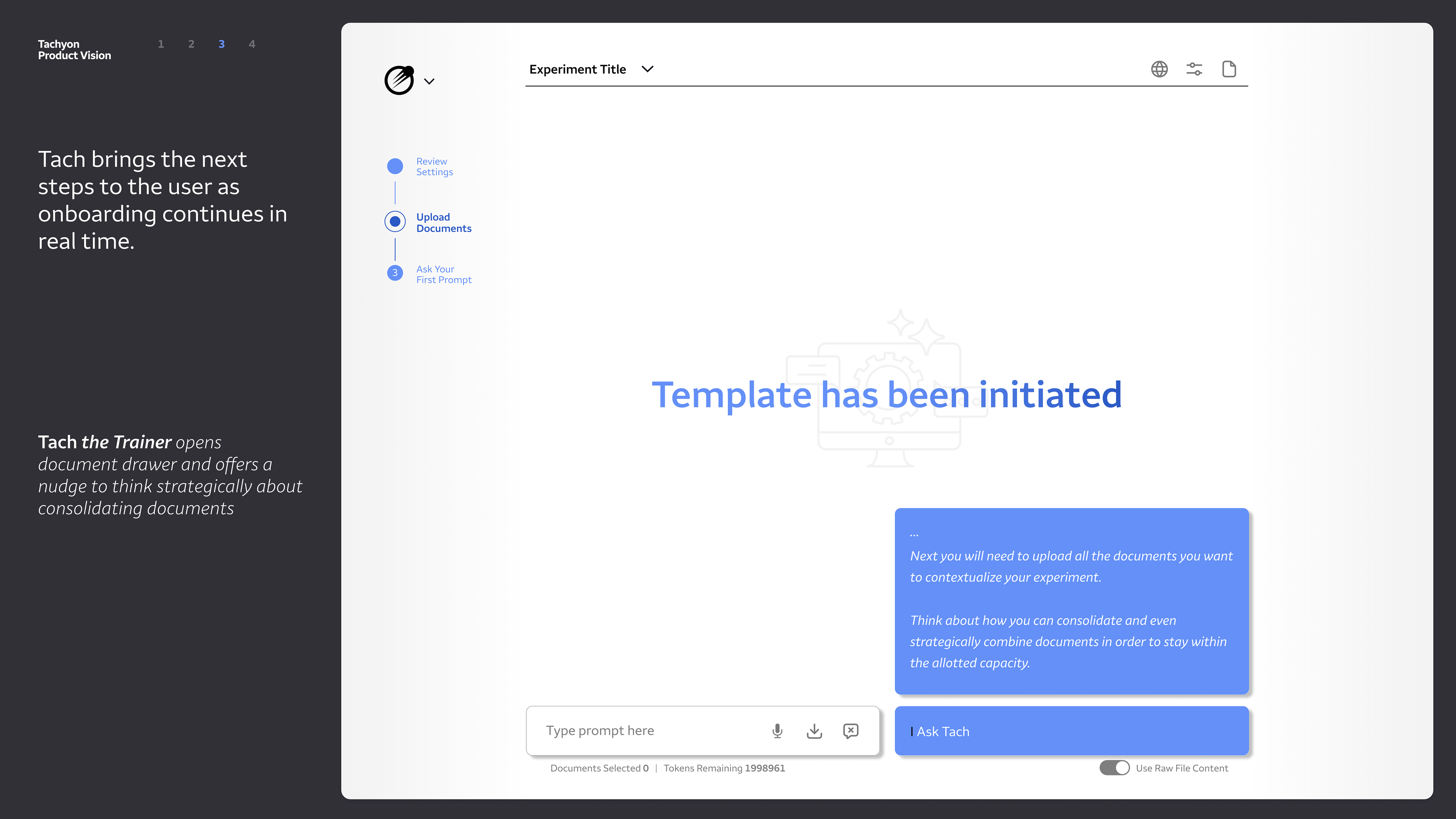
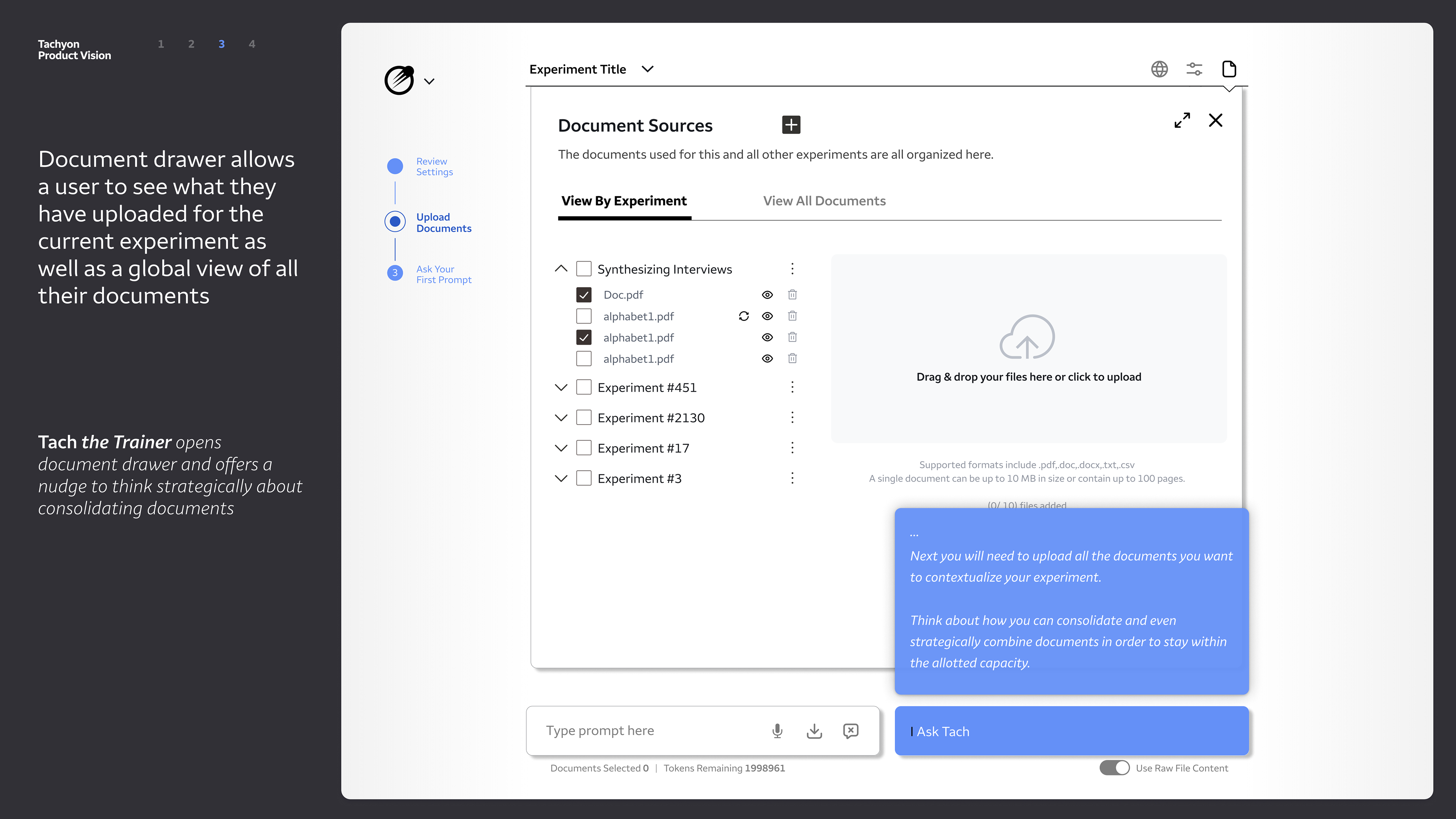
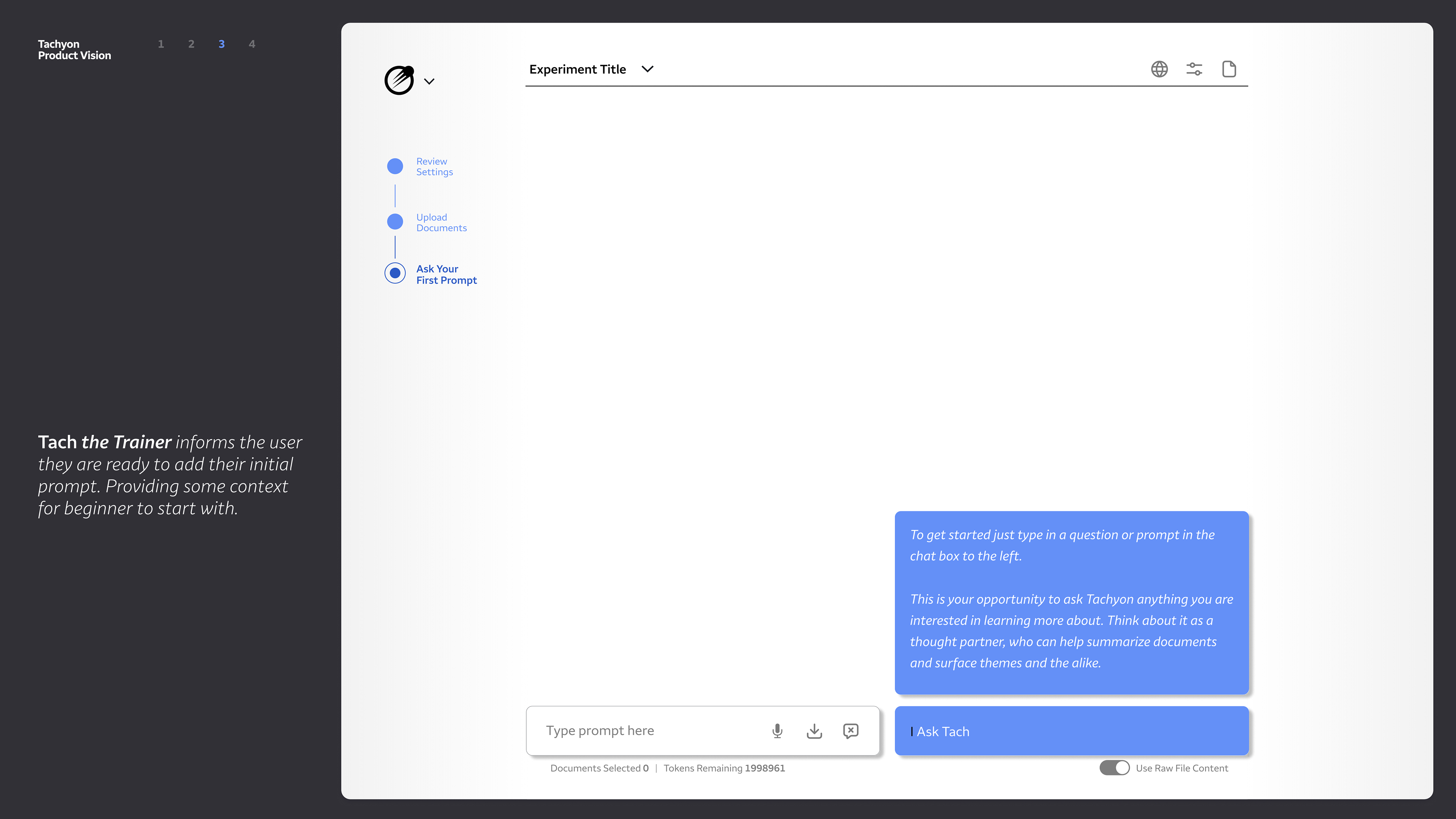
Tachyon evolves with its users, supporting them at every stage. As you grow more confident, Tach adapts to become more of a support tool.
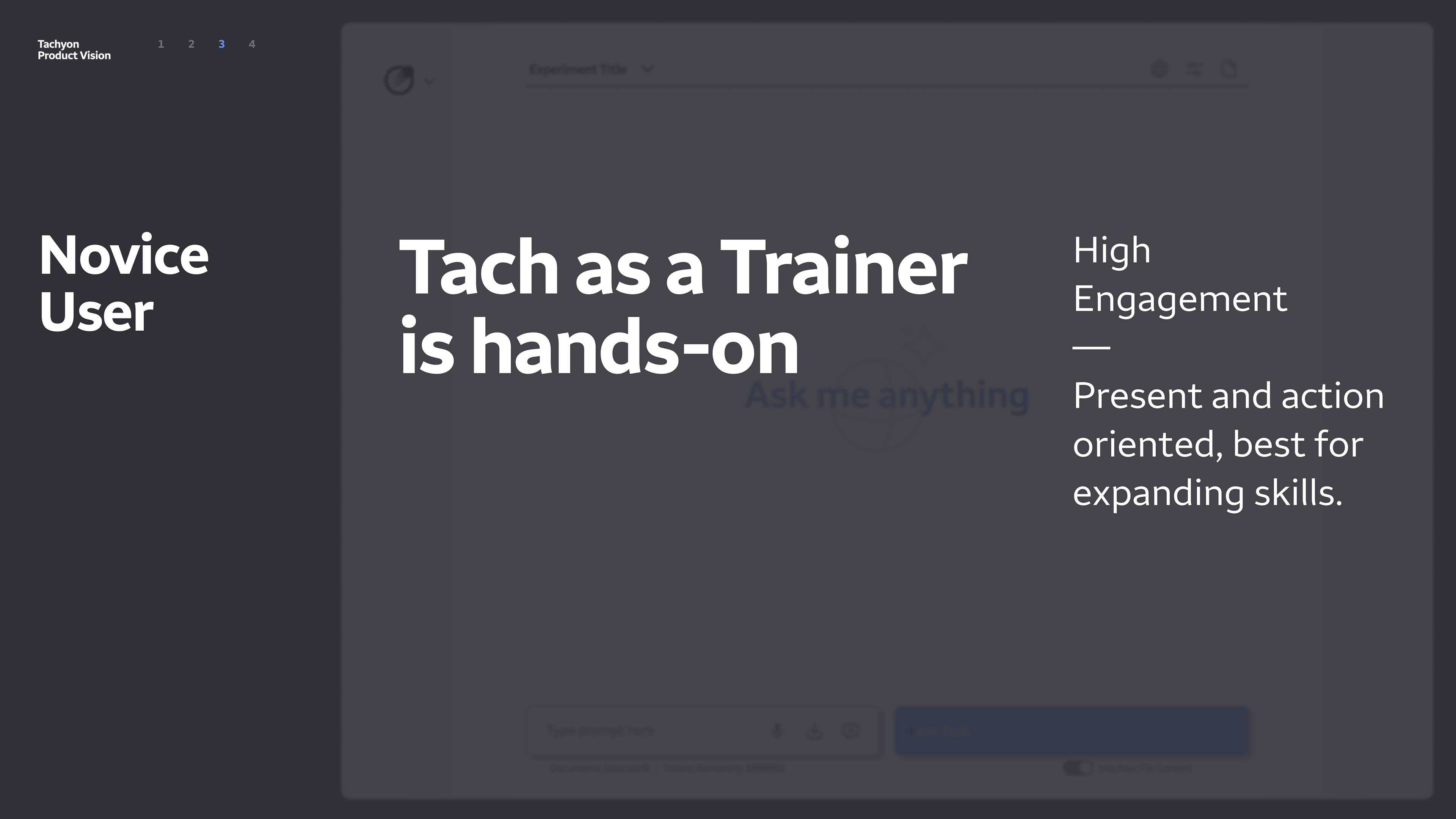
Novice User: Tach as a Trainer
Proficient User: Tach as a Coach
Advanced User: Tach as a Mentor
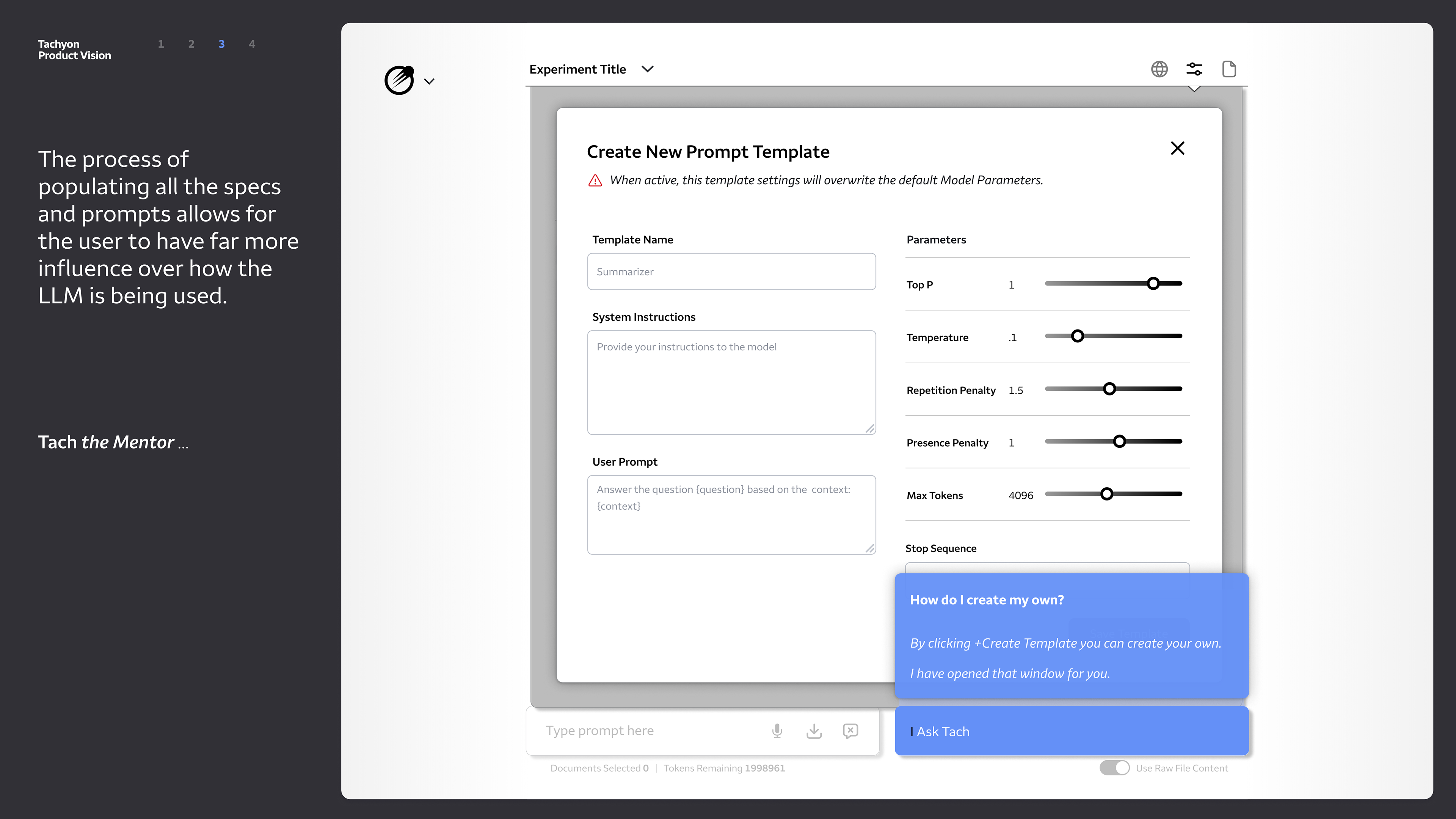
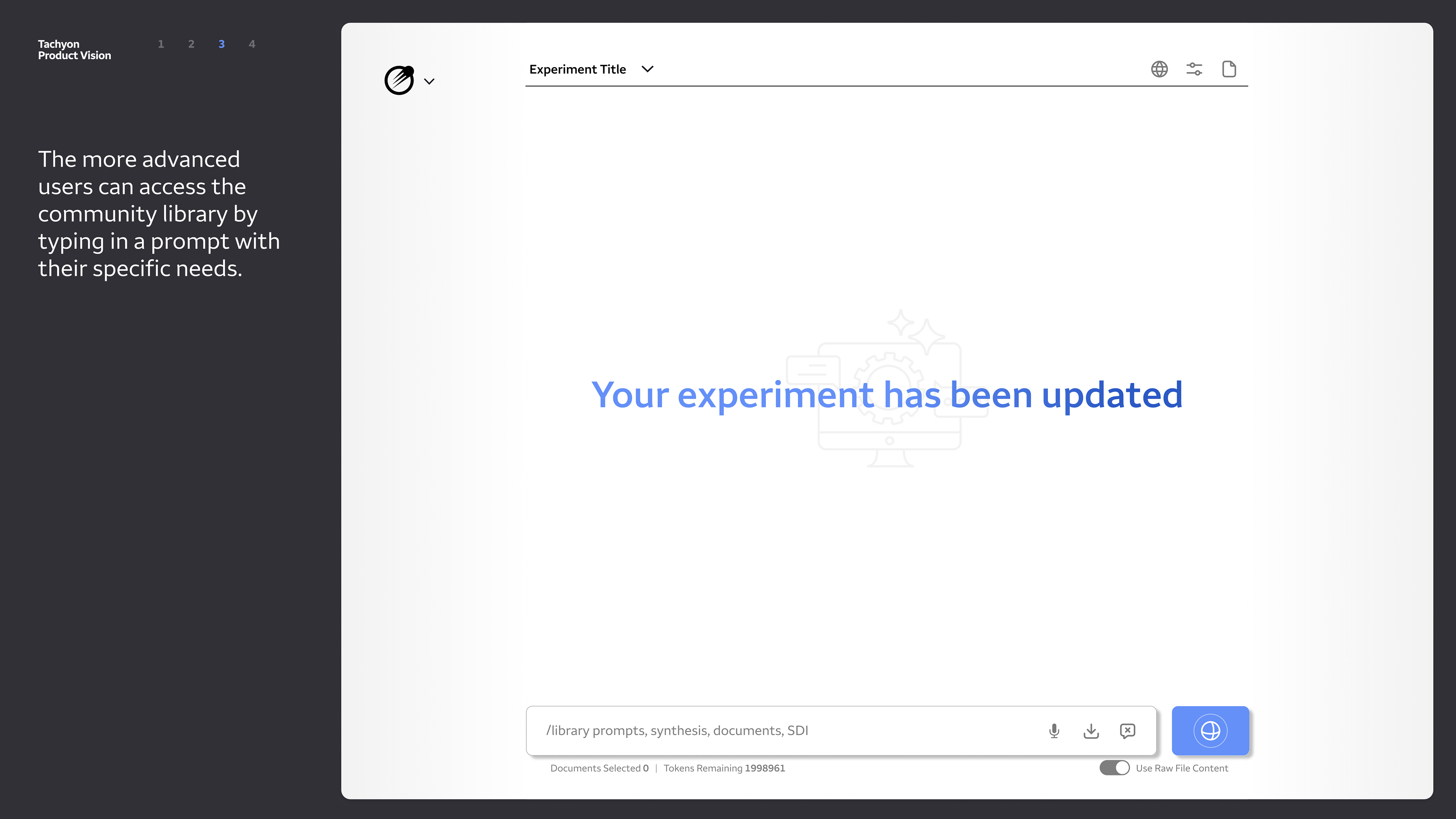
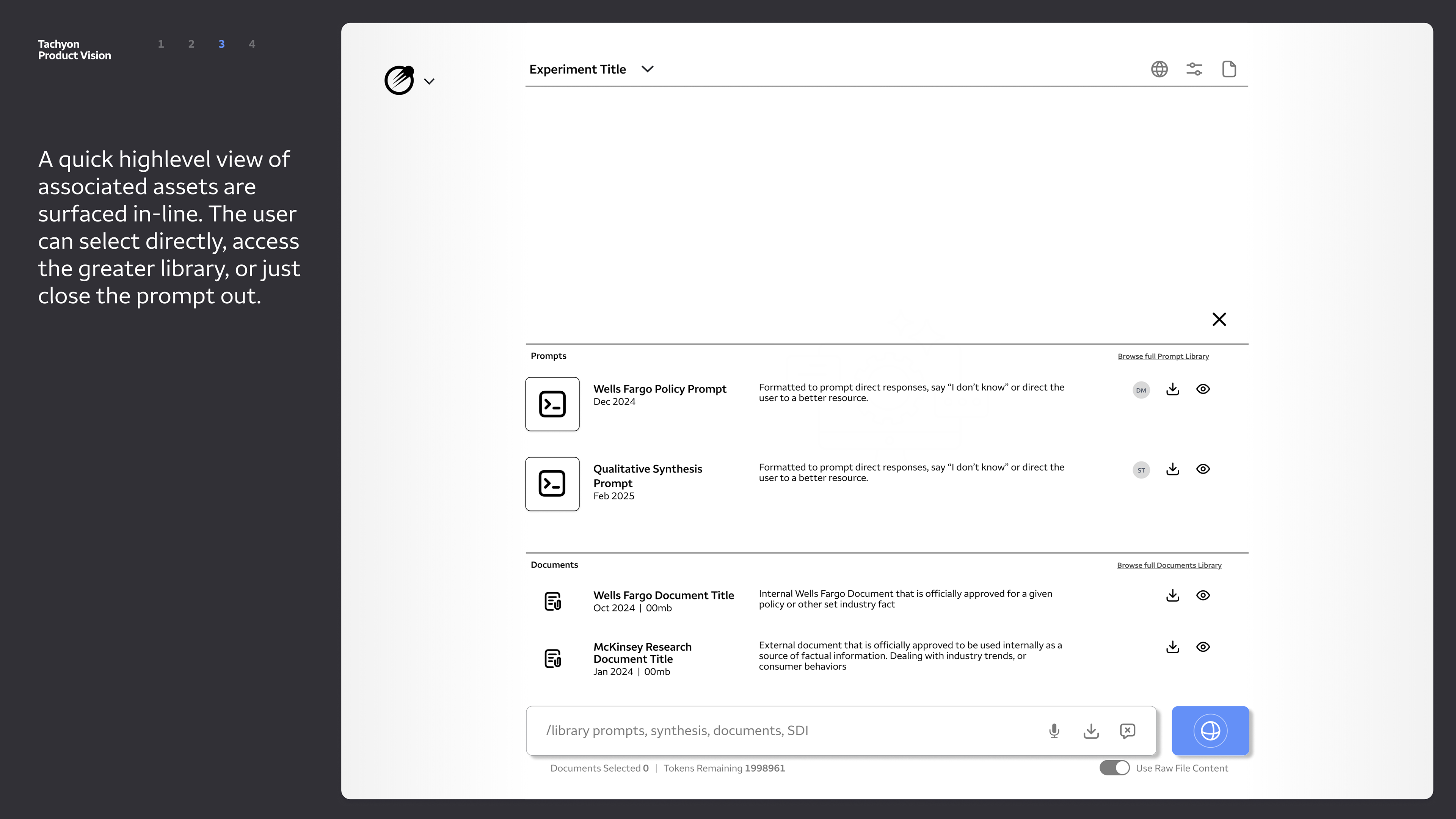
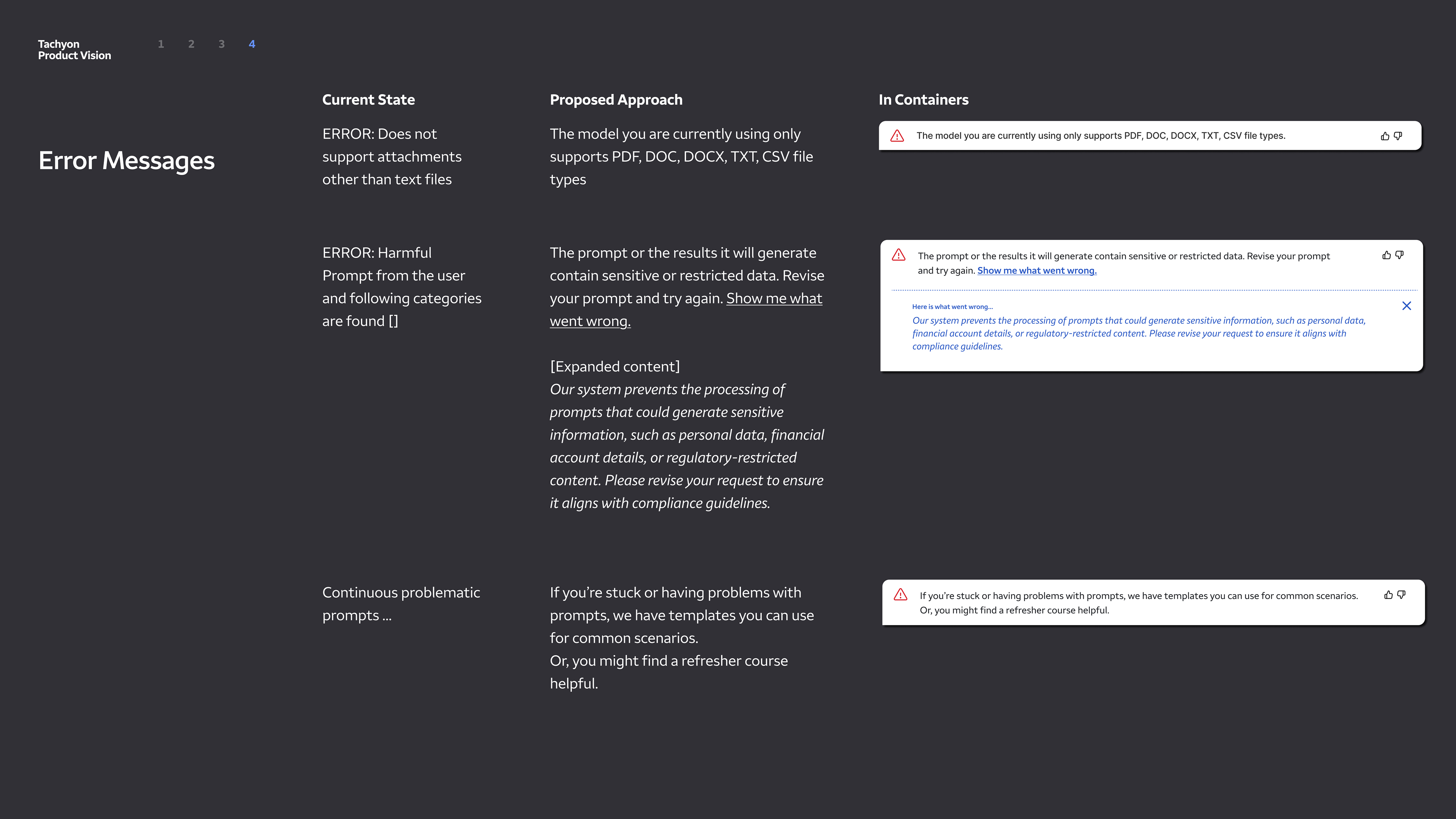
Humanizing through Content Design
We strived to humanize the technical language so that most users truly understand the tools and how they can best work for you and your situation.
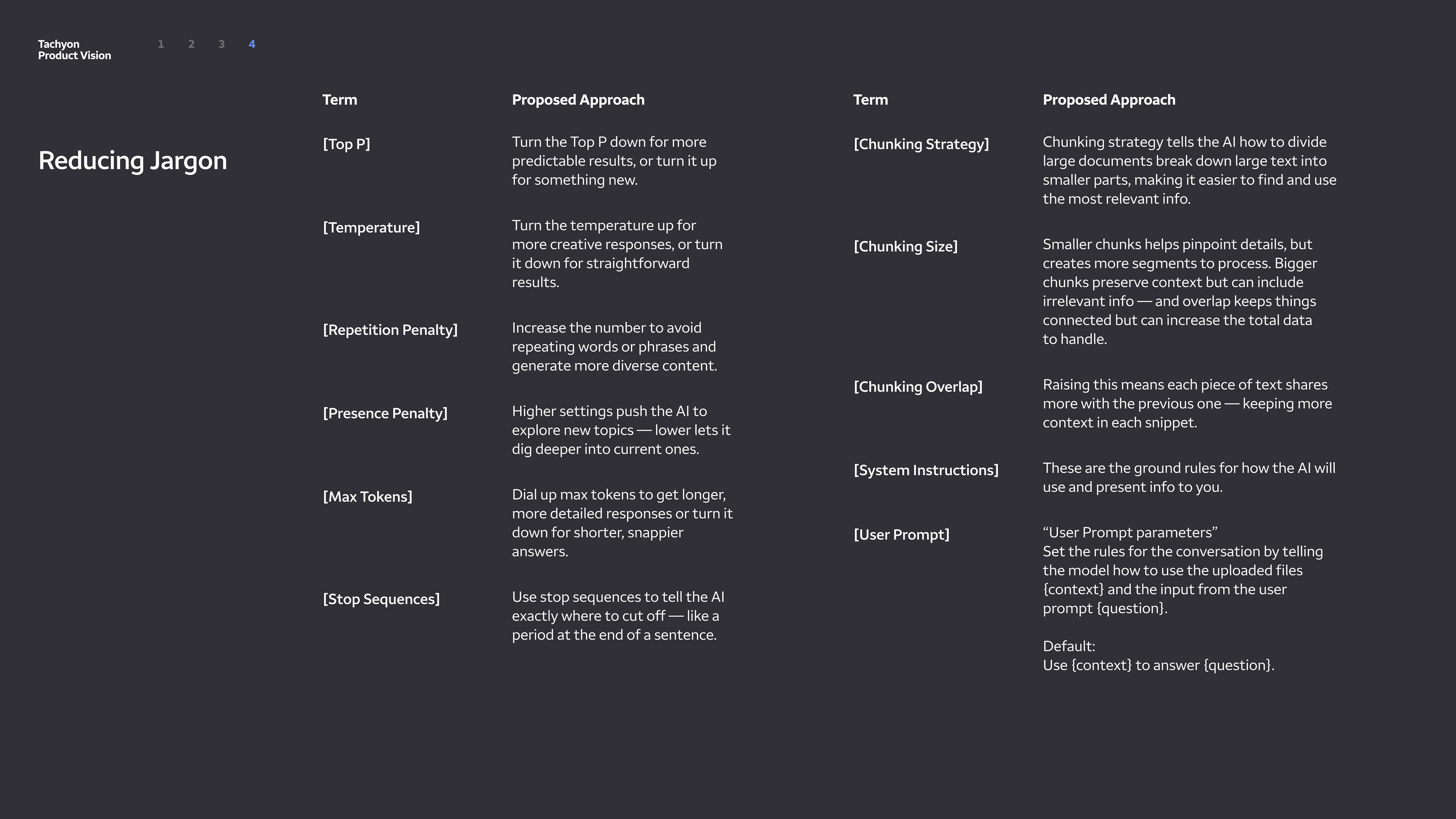
Leadership and influence
Alongside the product work, there was a parallel leadership track.
Throughout, my role shifted between facilitator, product strategist, and hands-on designer, helping the team make decisions about language, information hierarchy, and flows while keeping alignment with the broader AI strategy of the bank.
We convened stakeholders from engineering, platform, risk, and multiple business groups and helped them use the same language to talk about Tachyon’s role.
We shared the vision and prototype screens at the Wells Fargo Tech Showcase. The booth became a way to test reactions from a broad cross-section of employees and refine the narrative in real time.
Feedback from the showcases and workshops traveled up the reporting line, reinforcing that the product was not only technically sound but also understandable and usable by the people who would rely on it day to day.
For me, this project was as much about culture as it was about screens. Tachyon became a shared reference point for how the company wants to approach AI: model-agnostic, governed by design, and accessible to people who do not think of themselves as AI experts.